Source diesel connecting rod for toyota for cars, trucks, and engines
Compare 30 listings for diesel connecting rod for toyota from verified Chinese manufacturers. Review specifications like material, engine type, and certifications to find suitable parts for repair and replacement needs.
Key considerations
Products List




Comprehensive Sourcing Guide
Strategic Sourcing Guide for Diesel Connecting Rods for Toyota Applications
Understanding Technical Specifications and Engine Compatibility
When sourcing diesel connecting rods for Toyota applications, the primary objective is to align the component's physical and mechanical attributes with the specific engine architecture. The market data indicates a diverse range of specifications, suggesting that a single "universal" part does not exist. Buyers must first identify the exact engine model, as the provided data highlights specific engine types such as the 2JZ, 1.5t, and 3.2L variants. The 2JZ engine, often associated with high-performance applications, requires rods with precise dimensional tolerances, while diesel variants like the 1.5t and 3.2L demand components capable of withstanding higher compression ratios and thermal loads typical of diesel combustion cycles.
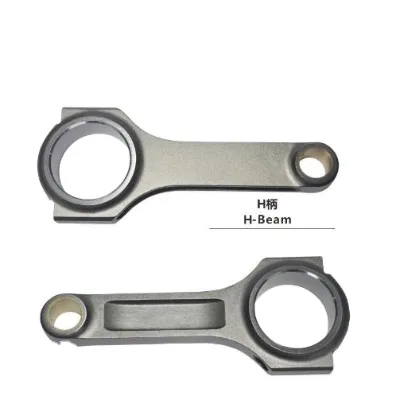
The material composition is a critical differentiator. The observed product listings reveal a split between steel and iron materials. Steel rods are generally preferred for high-stress applications due to their superior tensile strength and fatigue resistance, whereas iron rods may be suitable for standard OEM replacements where cost is a primary driver. The technical specifications further detail the manufacturing process, with options including forging and casting. Forged rods, as noted in the data, are typically associated with the "Forging" technic and are often used in high-performance or heavy-duty contexts. In contrast, casting processes are also listed, which may offer a more cost-effective solution for standard replacement needs. The specific model numbers, such as OM366 and RJ1100FE, serve as unique identifiers that buyers must cross-reference against their vehicle's service manual to ensure compatibility.
Dimensional accuracy is paramount. The data points to specific measurements, such as a center-to-center (C-C) distance of 142 mm and specific bore sizes for the small end (S/E) and big end (B/E). For instance, one dataset lists an S/E bore of 22 mm and a B/E bore of 55 mm. These figures are not generic; they are precise engineering parameters that must match the crankshaft and piston pin dimensions exactly. A deviation of even a fraction of a millimeter can lead to catastrophic engine failure. Furthermore, the bolt specifications, such as the 3/8" bolt size, and the quantity of 6 pieces per set, must be verified to ensure the rod fits the specific cylinder configuration, whether it is a 4-cylinder or 5-cylinder engine.
Compliance, Certification, and Standard Verification
In the B2B procurement of automotive components, verifying compliance with international standards is non-negotiable. The product data indicates that suppliers offer certifications such as CE, ISO, TSCE, and ISOCE. While the presence of these certifications suggests a baseline of quality management, buyers must understand that these labels represent the supplier's adherence to management systems rather than a guarantee of the specific part's performance in every instance. The "ISO" certification generally refers to ISO 9001 quality management standards, while "CE" indicates conformity with health, safety, and environmental protection standards for products sold within the European Economic Area.
The standard component classification is another vital area of verification. The data distinguishes between "Standard Component" and "Non-Standard Component" products. A standard component implies that the part meets established industry specifications and is likely an exact replacement for the original equipment manufacturer (OEM) part. Conversely, a non-standard component may be a custom modification or an aftermarket upgrade. Buyers sourcing for fleet maintenance should prioritize standard components to ensure interchangeability and reliability. The data also references specific standards like "RJ173F" and general "Standard or Customized" classifications. It is essential for procurement teams to request the specific standard documentation associated with the part number to confirm that the rod meets the necessary structural and material requirements for diesel engines.
Furthermore, the inspection protocols listed, including hardness testing, dimension checks, and crack detection, are critical quality indicators. These inspections are not merely optional add-ons but are fundamental to the integrity of the connecting rod. A supplier that explicitly lists these inspection methods as part of their process demonstrates a commitment to quality control. However, buyers should not assume that every listed product has passed these tests; rather, they should treat these as the expected baseline and request specific test reports or certificates of analysis for the batch being purchased. The "Standard Component" designation, when paired with rigorous inspection data, provides the highest level of confidence for diesel engine applications where mechanical failure can be costly.
Cost Drivers and Pricing Structure Analysis
The pricing landscape for diesel connecting rods is influenced by a complex interplay of material costs, manufacturing processes, and supply chain logistics. The observed price range in the market spans from $4.50 to $212.00 USD. This significant variance is not arbitrary but reflects the underlying differences in product attributes. The lower end of the spectrum likely corresponds to cast iron rods intended for standard replacement, where the manufacturing process is less intensive and the material cost is lower. The higher end of the price range typically aligns with forged steel rods, which require more energy-intensive processing, tighter tolerances, and higher-grade materials to withstand the extreme pressures of diesel combustion.
Material selection is a primary cost driver. Steel is generally more expensive than iron due to its superior mechanical properties and the complexity of its refining process. Additionally, the manufacturing technique plays a substantial role. Forged rods, which involve heating and shaping metal under high pressure, command a premium over cast rods, which are poured into molds. The data confirms that both forging and casting are available, and the choice between them should be dictated by the specific application requirements rather than price alone. For high-performance or heavy-duty diesel engines, the investment in forged steel is often justified by the extended service life and reduced risk of failure.
Packaging and origin also influence the final cost. The data shows packaging ranging from simple cartons to anti-tarnish paper and wooden boxes. Wooden boxes, often used for heavier or more critical components, add to the shipping weight and cost but provide superior protection during transit. The origin of the product, with listings from Hunan, Zhejiang, and Hebei in China, suggests that logistics costs may vary based on the specific port of departure and the shipping method selected. Buyers should also consider the Minimum Order Quantity (MOQ), which ranges from 1 to 50 units. Higher MOQs often result in lower per-unit costs, but they also tie up capital in inventory. For small-scale repairs, the ability to purchase single items is a significant advantage, even if the unit price is higher.
Typical Applications and Engine Configuration Matching
The application of diesel connecting rods is highly specific to the engine architecture and the intended use of the vehicle. The data indicates that these components are designed for both cars and trucks, highlighting their versatility across different vehicle classes. The specific engine types mentioned, such as the 2JZ, 1.5t, and 3.2L, correspond to various Toyota diesel and gasoline platforms. The 2JZ engine, famously used in performance vehicles, requires rods that can handle high RPMs and boost pressures. In contrast, the 1.5t and 3.2L engines are likely found in commercial or utility vehicles where durability and fuel efficiency are prioritized.
The number of cylinders is another critical factor in matching the correct rod. The data lists both 4-cylinder and 5-cylinder configurations. A connecting rod designed for a 4-cylinder engine will have different length and weight characteristics compared to one designed for a 5-cylinder engine. Procurement teams must ensure that the order quantity matches the engine configuration; for example, a 4-cylinder engine requires 4 rods, while a 5-cylinder engine requires 5. The data also notes that the selling units are often "Single item," which allows for the purchase of individual rods for replacement purposes, though sets of 6 are also available, likely for V6 engines or bulk orders.
The purpose of the component is explicitly stated as "for replace/repair," indicating that these are aftermarket or replacement parts rather than original equipment supplied during manufacturing. This distinction is important for warranty and liability considerations. When sourcing for fleet maintenance, it is crucial to verify that the replacement rod is compatible with the existing engine block, crankshaft, and piston assembly. The "Condition: New" attribute confirms that the parts are not refurbished, which is a standard expectation for critical engine components. Buyers should also consider the "Customization: Available" attribute, which suggests that suppliers can produce rods to specific dimensions if the standard parts do not fit a modified engine or a unique application.
Supplier Evaluation and Geographic Considerations
Evaluating suppliers for diesel connecting rods requires a focus on their manufacturing capabilities, geographic location, and track record. The data identifies suppliers located in Hunan, Zhejiang, and Hebei provinces in China. Each of these regions has a distinct industrial focus; Zhejiang is known for its robust manufacturing base, while Hebei and Hunan are also significant hubs for automotive parts production. The geographic location can impact lead times and shipping costs, but more importantly, it reflects the supplier's access to raw materials and specialized machinery.
When evaluating a supplier, buyers should look for evidence of the "Processing" capabilities listed, such as forging, machining, milling, heat treatment, and surface treatment. A supplier that controls the entire process chain, from raw material to finished product, is generally more reliable than one that outsources key steps. The presence of "OEM: Yes" indicates that the supplier has experience working with original equipment manufacturers, which is a strong indicator of their ability to meet strict quality standards. However, buyers should verify the specific OEM relationships and the scope of their experience to ensure they are not relying on a supplier with limited exposure to diesel engine components.
The "Brand Name" listed as "Toyota" in some contexts suggests that the parts are designed to fit Toyota engines, but it does not imply that the supplier is an official Toyota dealership or authorized distributor. Buyers must be cautious not to confuse aftermarket parts with genuine OEM parts. The "Customization: Available" and "OEM: Yes" attributes suggest that suppliers are capable of producing parts to specific drawings, which is valuable for custom builds or rare engine modifications. However, this also requires a higher level of communication and specification clarity between the buyer and the supplier to ensure the final product meets the required engineering standards.
Quality Control Protocols and Long-Term Procurement Strategy
Quality control is the backbone of successful procurement for critical engine components. The data highlights specific inspection methods, including hardness testing, dimension checks, and crack detection. These are not merely marketing terms but essential quality gates that must be verified. Hardness testing ensures that the material can withstand the cyclic loads of the engine without deforming. Dimensional checks confirm that the rod fits the engine assembly precisely, and crack detection identifies any surface or subsurface defects that could lead to failure under stress. Buyers should request detailed inspection reports for each batch of rods purchased, rather than relying on general quality statements.
The "Warranty: 12 Months" attribute provides a baseline level of protection for the buyer. This warranty period suggests that the supplier stands behind the durability of their product for at least one year. However, buyers should clarify the terms of the warranty, including what constitutes a defect and the process for claiming replacement. For long-term procurement, establishing a relationship with a supplier that offers consistent quality and reliable warranty support is more valuable than finding the lowest price. The "Quality: High Preformance" attribute, while subjective, should be backed by tangible evidence such as test data or customer testimonials.
Long-term procurement strategies should also consider the "Standard Component" versus "Non-Standard Component" distinction. For fleet operations, standardizing on standard components simplifies inventory management and reduces the risk of ordering errors. However, for specialized applications, the availability of customized parts may be necessary. Buyers should maintain a clear inventory of the specific part numbers, such as OM366 and RJ1100FE, to ensure consistency in future orders. Additionally, the "Condition: New" and "Inspection" data should be part of the standard procurement checklist to ensure that every shipment meets the required quality standards. By integrating these quality control measures into the procurement process, buyers can mitigate the risk of engine failure and ensure the long-term reliability of their diesel vehicle fleets.
FAQs
What certifications do diesel connecting rod for toyota suppliers offer?
Suppliers typically offer CE, ISO, TSCE, and ISOCE certifications. These labels indicate adherence to quality management systems and safety standards rather than a guarantee of specific part performance in every instance.
Which manufacturing process is used for diesel connecting rod for toyota?
The products utilize forging, casting, machining, milling, and heat treatment processes. Forged rods are generally preferred for high-stress applications due to superior tensile strength compared to cast alternatives.
How are diesel connecting rod for toyota dimensions verified before shipment?
Inspection includes hardness testing, dimension checks, and crack detection. These protocols are fundamental to ensuring the component meets the precise engineering parameters required for engine compatibility.
Can I customize the diesel connecting rod for toyota specifications?
Customization is available for buyers requiring specific dimensions or modifications. This option supports unique engine builds or applications where standard components do not fit the existing assembly.
What is the warranty period for diesel connecting rod for toyota parts?
The standard warranty period is 12 months for these new components. This coverage applies to the replacement parts intended for repair or replacement purposes in automotive applications.
Which materials are used for diesel connecting rod for toyota production?
Materials include steel and iron depending on the specific product listing. Steel is often used for high-performance needs while iron may be suitable for standard OEM replacements.